
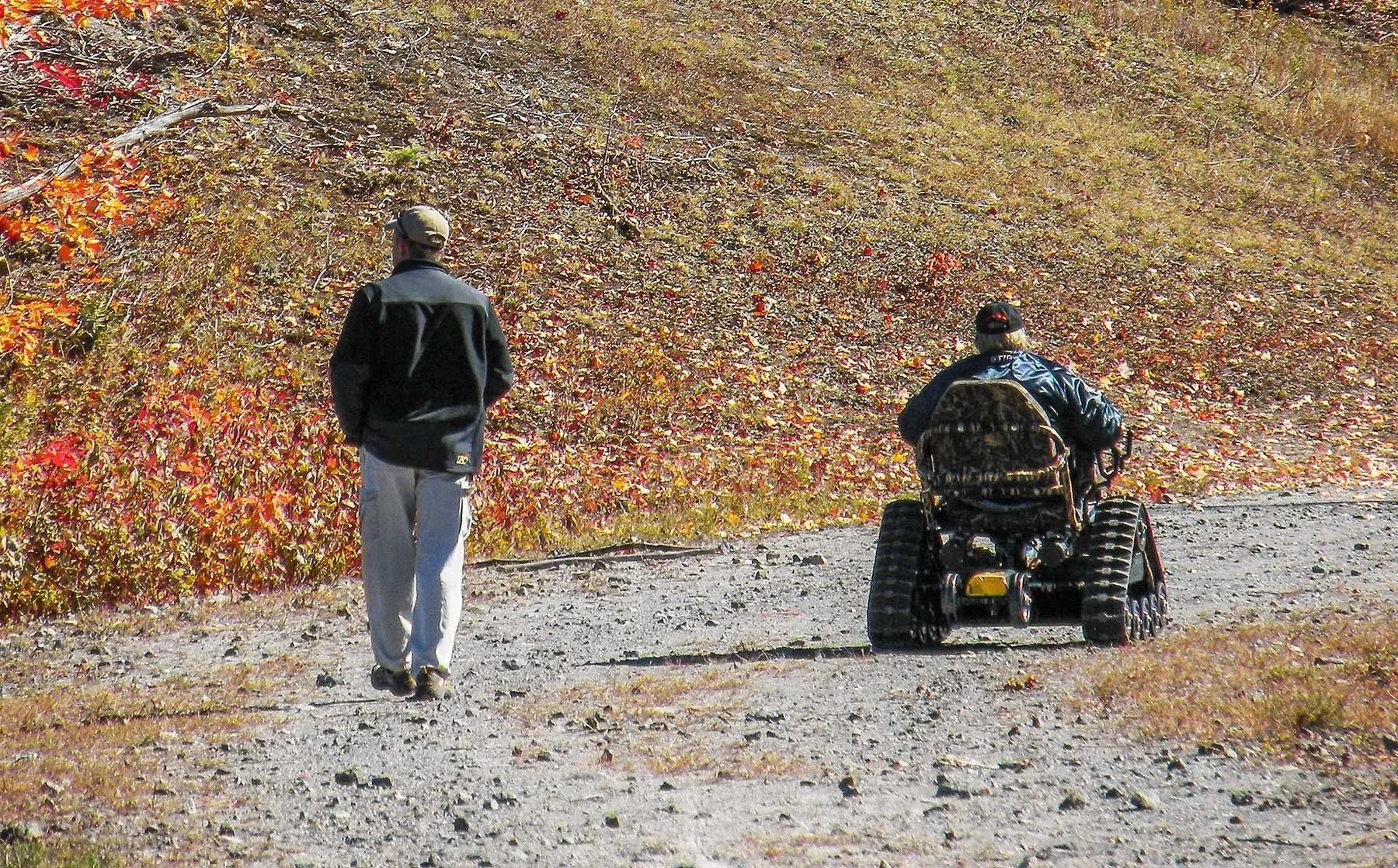
Other Power-Driven Mobility Devices
Access to the Forest Preserve with OPDMDs
In 2025, Adirondack Wilderness Advocates (AWA), along with many others, prevailed in challenging the Adirondack Park Agency’s proposal to change the definition of Motor Vehicle the State Land Master Plan. This opened the doors for us all to have a sincere discussion about Other Power-Driven Mobility Devices (OPDMDs). By definition, OPDMDs are mobility devices other than traditional wheelchairs, such as golf carts, scooters, e-bikes, and other battery- or fuel-powered vehicles.
Where can OPDMDs be used?
That is the question of the hour.
And one that the Department of Environmental Conservation (DEC) is seeking to answer with a new OPDMD Policy. A draft of this policy was released in January 2026. Under the current motorized access program, people with disabilities can apply for permits to use cars, ATVs, and trucks on a limited number of state roads and truck trails throughout the state. The DEC’s new proposed policy would maintain these allowances while expanding access to a broader range of mobility devices, including OPDMDs.
Wilderness and Access
AWA contends that the right of equitable access to public places and facilities for those with disabilities is fundamental. AWA also contends that the right of Wilderness to be protected as defined in Federal law and in New York State law - the only land classification that is to be met on its terms, not human terms, untrammeled, where people are visitors whose imprint is largely invisible – is fundamental too. These rights can be balanced in a reasonable way.
In keeping with Americans with Disabilities Act (ADA) Title II regulations on mobility devices (CFR § 35.137), wheelchairs are allowed on state lands anywhere that pedestrian access is permitted. It is a distinctly American democratic tradition to balance competing rights and interests, and the ADA is no exception. Those who crafted and amended the ADA recognized the value of Wilderness as something different from all other lands. The Act explicitly exempts Federal Wilderness (which has the same definition as Adirondack Wilderness, almost word-for-word): powered wheelchairs are allowed (although trails are not required to be modified to accommodate them), but the same allowance is not granted to OPDMDs. In their wisdom, the designers of the ADA understood what many disability advocates have also voiced: Wilderness is for everyone, just the way it is, and as a precious and scarce resource, its right to exist in a natural state must be accommodated.

Learn More