
Searching for Remoteness in … Delaware?
As a lover of wilderness, it will probably surprise you to learn that I recently (voluntarily) chose to vacation in Delaware. Yes, popular for being the first state, blue hen chickens, and tax-free shopping, Delaware is indeed interesting. But it’s definitely a far cry from my home in the Adirondacks. From my house in Saranac Lake, I can see several peaks in the McKenzie Mountain Wilderness. No chickens in sight, for better or worse.
“Remote” is not really a word that comes to mind when I think about Delaware, so it surprised me to learn that the state is actually home to a spot quite remote.
I learned this information when I discovered Project Remote. This project, which I am now deeply enamored by, was born out of concern that remoteness is disappearing across the United States. Roads are everywhere, even within our National Parks. I won’t sit here and say all roads are bad, because they aren’t. The troubling statistic is that it is virtually impossible - in the contiguous United States - to be more than five miles from a road. In fact, using GIS measurements here in the Adirondacks, we can see that less than 5% of the lands in the Adirondack Park are more than three miles from a road or snowmobile trail. For a place that can honestly brag about being the birthplace of wilderness, that is kind of alarming to read.
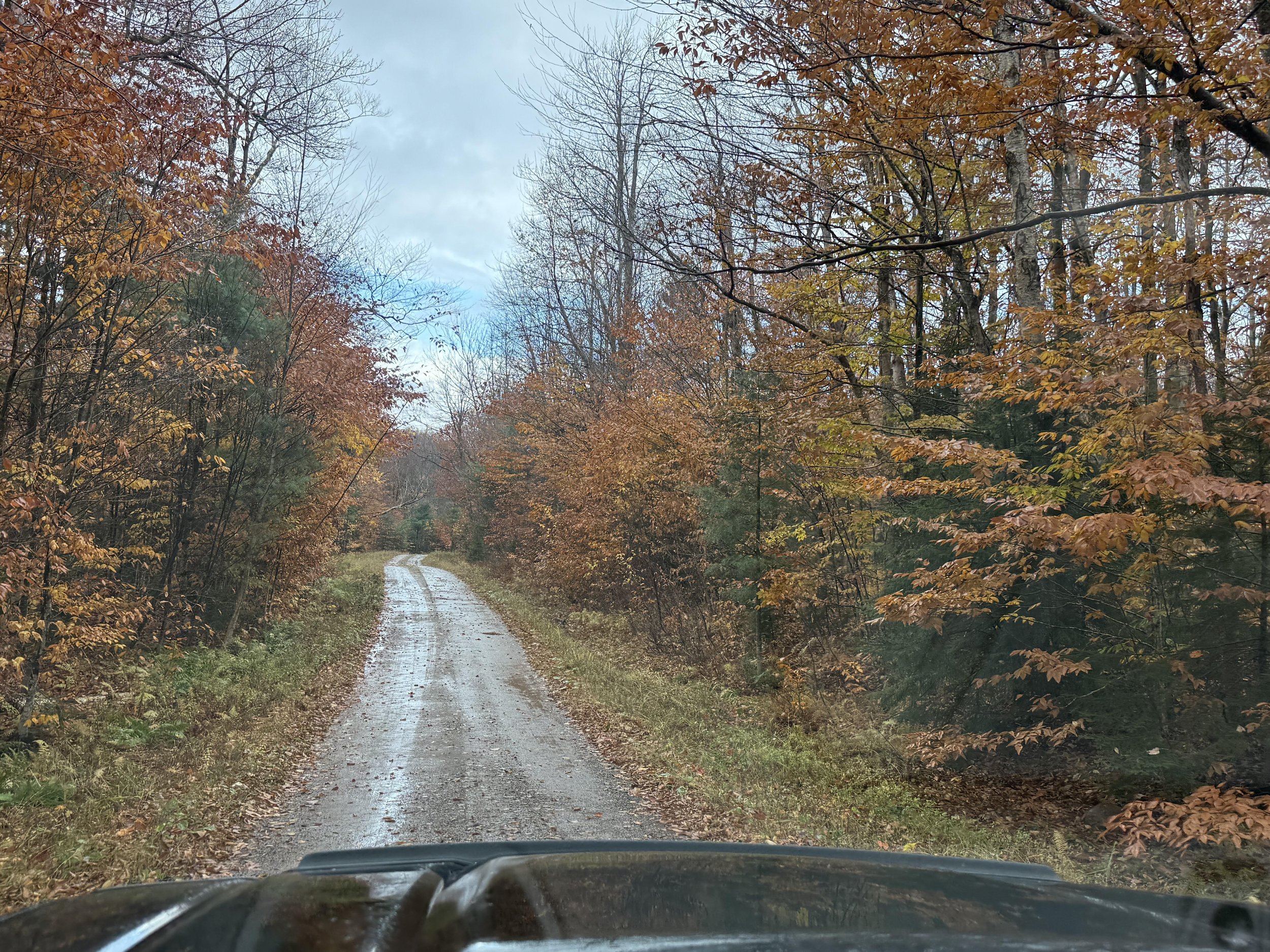
A gravel road that penetrates deep into one of New York’s Wilderness areas, as seen in October 2025.
In the United States, there are over 4-million miles of roads. How can someone possibly be remote when there is so much pavement? And what even is remoteness anyway? That is an important definition to unpack first. There are two ways to look at it. The first being the feeling of remoteness, which is a biased and qualitative metric because, of course, we all think and feel differently. To define what is remote, we need a quantitative metric that can be applied without bias. It needs to be repeatable from one observer to the next. Roads and snowmobile trails with motorized use are a known quantity, so measuring the distance from those features is how we determine remoteness. A policy the Wilderness Advocates and others put forth to the APA is not about new land classification. It’s about recognizing and protecting something rare: distance from roads.
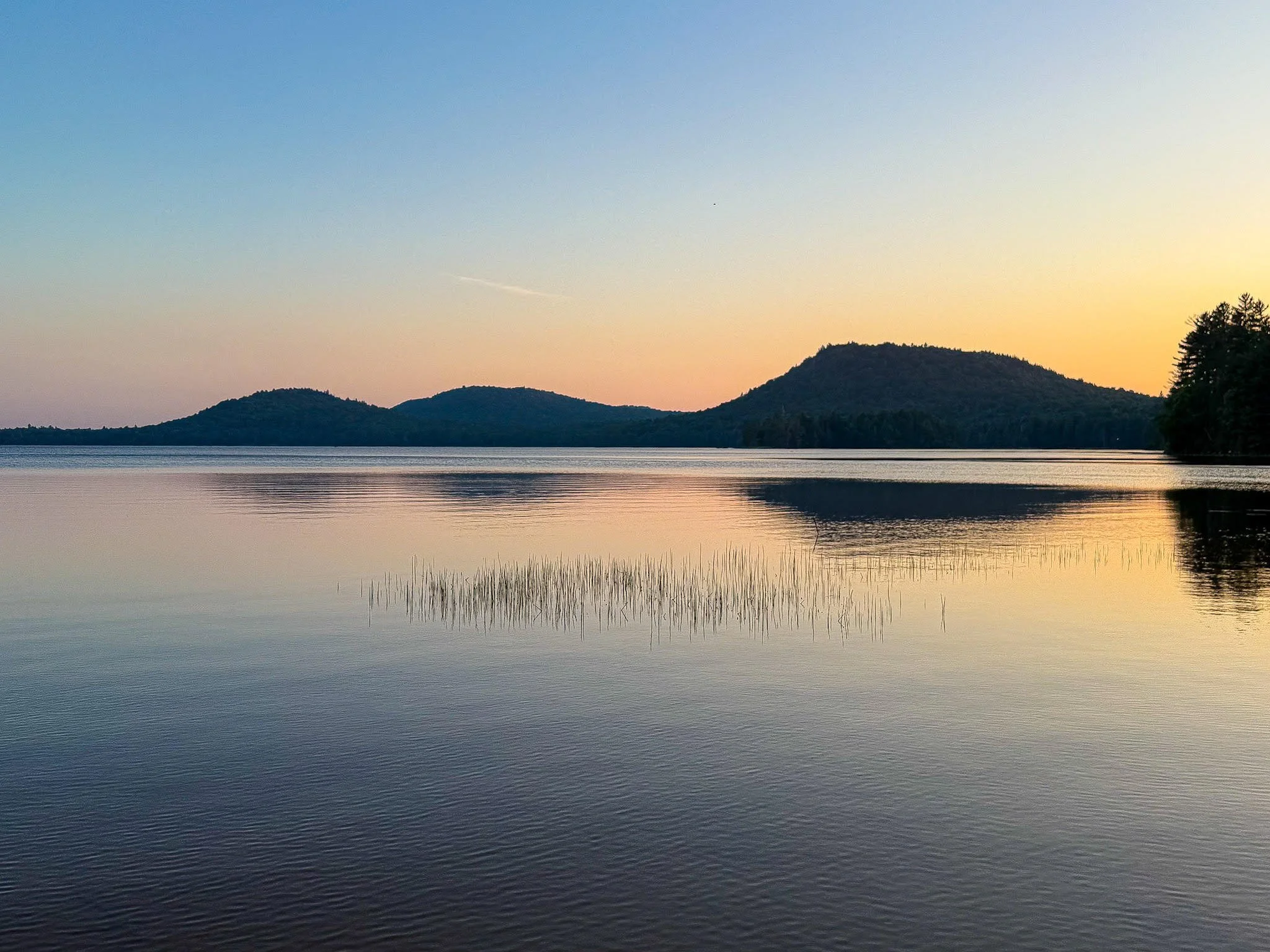
Places like Lake Lila, in the William C. Whitney Wilderness, may feel remote, but the reality is no part of the lake is greater than 3-miles from a (private) road. Photo taken June 2025.
By now you must be thinking that there is nowhere in Delaware that is a great distance from a road. It’s not like here. Indeed, Delaware and the Adirondacks are very different. The population of Delaware recently soared over 1-million, despite being the second smallest state, weighing in at just south of 2,500 square miles. The Adirondack Park is about 9,375 square miles and has a year-round population of roughly 130,000. There is definitely more people per square mile in Delaware; the numbers don’t lie. Despite the small geographic area and population of the state, the most remote location in Delaware is actually 3.2 miles from the nearest road. I was as shocked as you are. Where is this wonderfully remote place?
Let me introduce you to Bombay Hook National Wildlife Refuge.
Established on March 16, 1937, the Refuge was created as a resting and feeding area for migratory and wintering waterfowl. Today, the Refuge totals 15,978 acres. It is largely a tidal marsh. Seems like a bad place for a road, in my humble opinion. With glee, during the initial stages of my trip research, I located Delaware’s most remote spot, which happened to be within the Refuge, but not accessible by human feet without traversing a tidal marsh. Unfortunately, I am not a bird or sea creature, so getting to the exact location proved to be beyond my abilities. Thankfully, Project Remote took a video for us all on YouTube to experience.
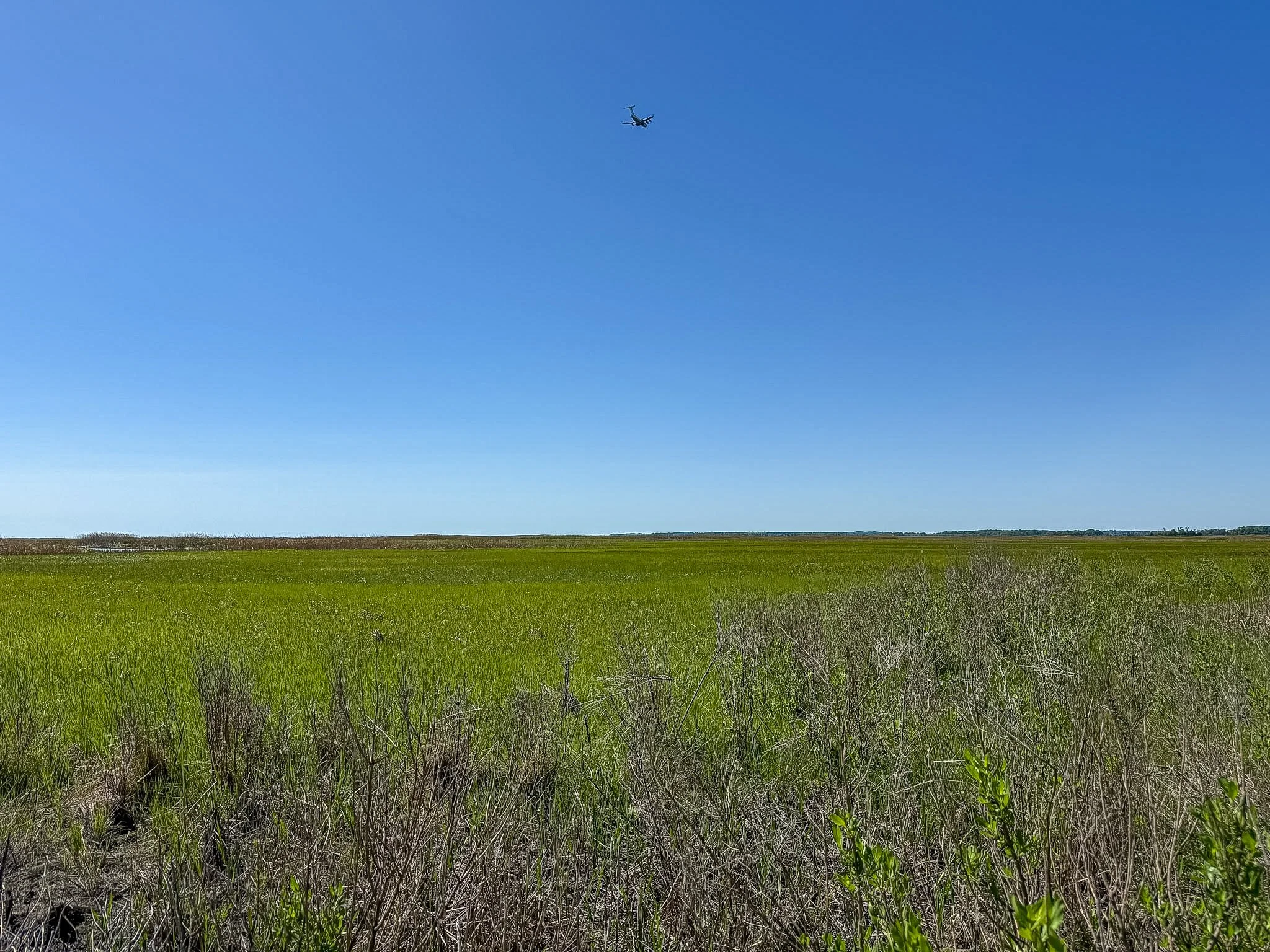
This photo was taken standing as close as I could get to Delaware’s most remote location. Note the military aircraft flying above. May 16, 2026.
Perhaps my feeling of remoteness (and definitely my physical remoteness) was affected by not being able to get away from the designated road. But I certainly did enjoy getting as close as I could to the most remote spot in Delaware!
Then something strange happened. I was standing as close to the remote spot as I possibly could when I started to hear an engine. Lo and behold, it was coming from Dover Motor Speedway. That was something I never heard deep in any Adirondack Wilderness. I can’t say I ever thought I’d be writing about remoteness and NASCAR in the same blog.
One thing that did strike me about Delaware’s remote spot is that it was identified by its distance from a road and not its distance from all motorized means of transportation. Those who opened Google Maps as soon as I mentioned Bombay Hook will be able to tell you why this is important. The boundaries of the Refuge extend all the way to Delaware Bay, where the Delaware River is an aquatic highway for a major shipping route. Commercial vessels and recreational craft alike use this channel to get from the Atlantic Ocean all the way up to Philadelphia, PA, and beyond. The U.S. Army Corps of Engineers maintains this as part of a federal navigation project, recently deepening it to accommodate larger, more modern vessels.
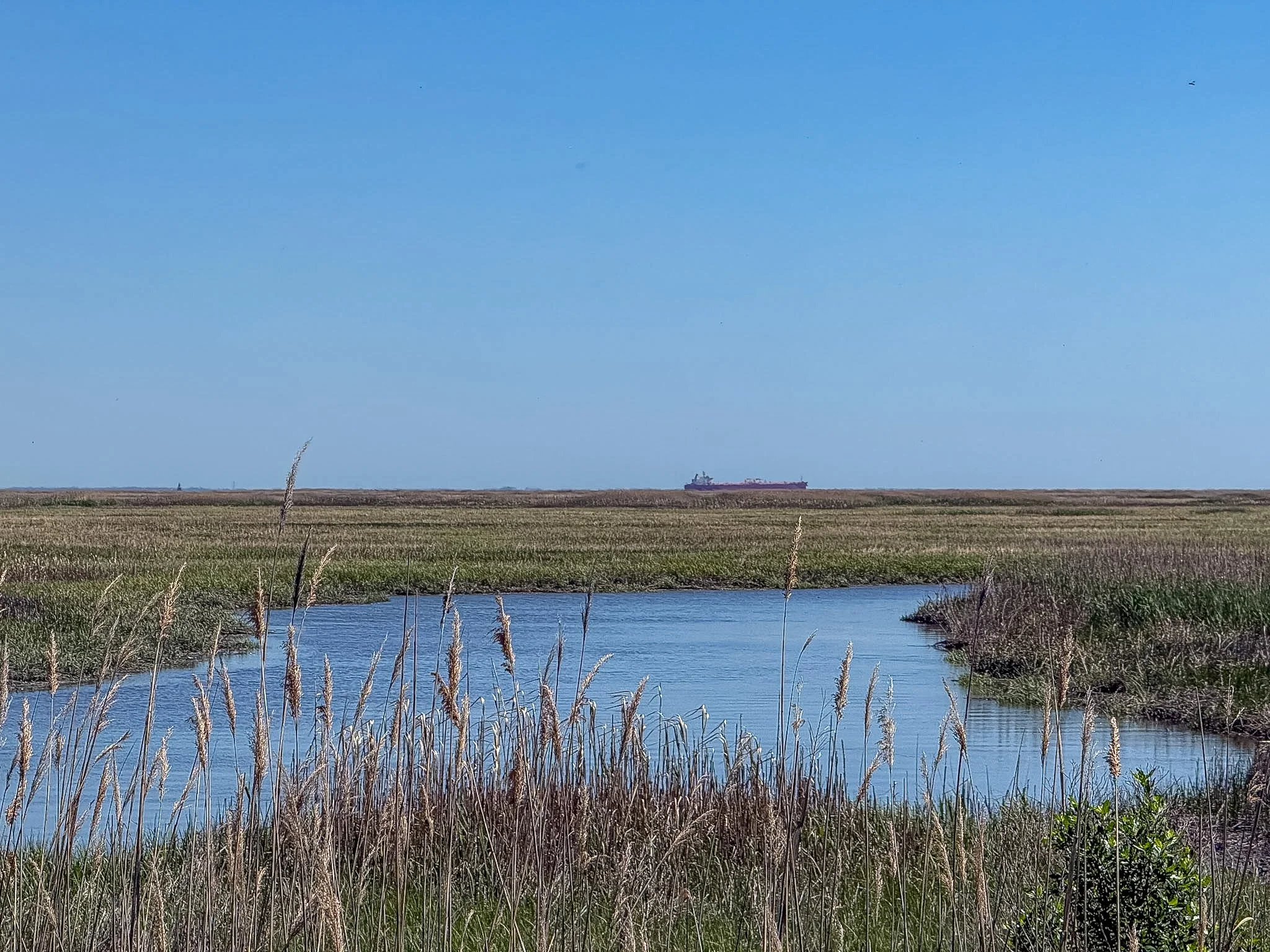
A cargo ship in Delaware Bay as seen from the Wildlife Drive road within Bombay Hook National Wildlife Refuge. May 16, 202
So, is a location within eyesight of this major shipping channel remote?
If it was Janelle’s world, I wouldn’t call that remote. But, alas, sometimes Janelle’s world and reality don’t coincide. Project Remote (and Adirondack Wilderness Advocates in our proposal to the Adirondack Park Agency) recommends using roads (and snowmobile trails) with motorized use in remoteness measurements. Shipping channels aren’t a factor for us here in the Adirondacks, so we didn’t consider that one. This leads us to the crux of the matter: how we define remoteness and how it’s measured are important.
Remoteness is one of the characteristics enshrined in the Adirondack Park State Land Master Plan. It is an essential feature of untrammeled wilderness and the ability to experience solitude. Remoteness is vital because it protects vulnerable ecosystems from human interference, allowing sensitive fauna (and flora, too) to thrive without habitat fragmentation. These areas are “arks.” I don’t think the cargo ships I saw in the Delaware Bay were captained by Noah or carrying two of each creature, but I guess you never know. There definitely is no Noah of Noah’s Ark fame at New York’s most remote location in the High Peaks Wilderness (5.3 miles from the nearest road). There was, though, a hermit named Noah who was “not well satisfied with the world and its trends.”
Unfortunately, we know all too well the trend these days is to build, baby, build. I, for one, am not satisfied with that. I wanted to have some profound realization out there in the marsh, but I found myself at a loss for words. Did I feel remote in Delaware? Not particularly. Did I actually travel to the most remote location? Also no. Does this blog actually accomplish anything because I can’t truly compare remote spots in Delaware and New York? Who’s to say.
And just as that thought left my brain, drifting away with the salty breeze, the NASCAR engines roared.
All photos taken by Janelle Jones.