

Have a Little Faith in the Forest Preserve
….Just over a century ago, there was a public campaign to acquire Mount Marcy – then a privately-owned mountain, like many of the High Peaks – as part of a “Victory Mountain Park,” which was envisioned by its promoters as a pleasure ground for service members returning home from World War I. Although no one refers to the state’s highest summit as Victory Mountain Park today, it is hard to imagine the Forest Preserve being complete without it….

VUM Topic of Next Wilderness Webinar
Visitor Use Management (VUM) is getting a lot of attention in discussions about how best to manage and protect the Forest Preserve. But what is it and how can it benefit the Adirondack Park? How does it relate to the recently-released advisory reports for managing the High Peaks Wilderness?

The Glory of Fall in the Adirondacks
While some people plan their big vacations for July or August, I schedule mine for early October. This is the best hiking and camping weather, and often the last spout of good paddling weather for the year. The slight chill decorating the edge of an afternoon breeze across an Adirondack pond stimulates my senses, and nighttime never arrives without my campfire already blazing.
But it is always too ephemeral — gone before we are ready…

This Land is Your Land
….As far as I knew, or cared to know, I would be the first person to complete this loop. The entire distance was on established trails, but the majority of this first day would be on land that had been off-limits to the public until just a few years prior. My previous explorations of the MacIntyre West Tract had confirmed the information I had gleaned through online contacts: that the long-standing tenants of this land had been maintaining their own trail system on what was previously a private forest.

So Much Work to be Done
McMartin was an outspoken advocate for trails….This “Short History” attempts to defend that position by arguing New York State has never developed a master plan for hiking trails, and that the hiking trail network as it existed during her lifetime happened more or less by historical accident….we are debating many of the same topics that occupied much of her career. Thus there is a timeliness in posthumously publishing one of her final essays now.

An Advocate for Trails
….I was introduced to two of the trails to small mountains by Lawrence King, an avid snowshoer from Schenectady who pioneered routes to their cliff-top summits. We flagged a trail up and over Good Luck Mountain for a wonderful view from the cliffs. That trail connected two snowmobile trails and made good hiking use of them.
Cuomo’s Divisive Adirondack Legacy
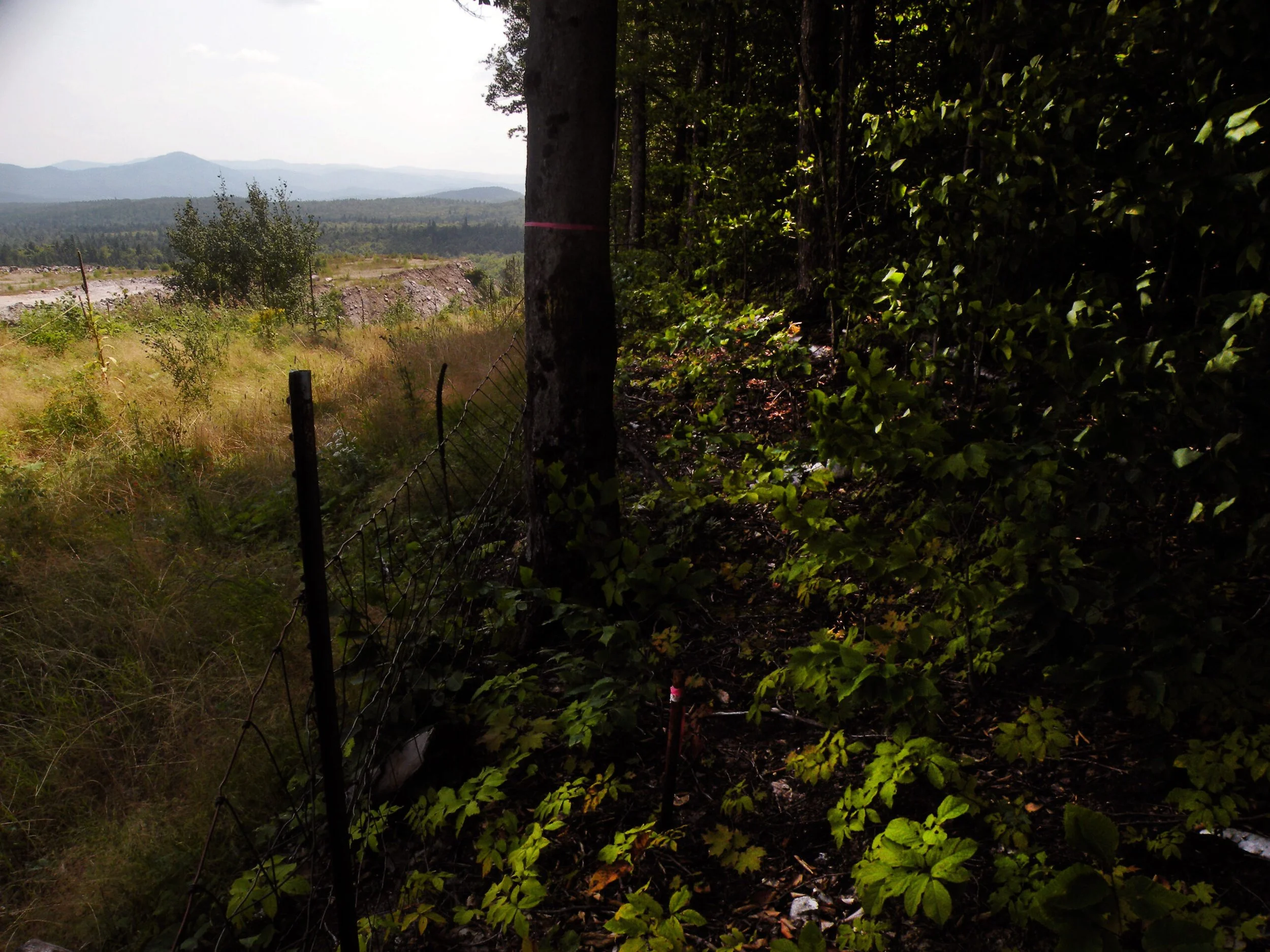
If you travel far enough northeast in Essex County you’ll reach a seemingly un-Adirondack mixture of expansive pastures interrupted by forested hills – a bucolic landscape somewhat more evocative of Vermont or the Catskills rather than the land of French Louie and Old Mountain Phelps. But this is nevertheless one’s first impression of Exit 32. Turning westward onto County Road 12, though, one is presented with a rugged mountain skyline, where the Adirondack bedrock seems ready to burst vertically out of its forested cloak….

Trails in the Mountain Pleasure Grounds
….So, how did all these routes get to be state trails? The Laws of 1895 authorized the state to lay out paths in the newly created Adirondack Park. There is little evidence that anything was done at that time. In 1909 Governor Hughes advocated trails and roads to give greater access to the “mountain pleasure grounds.” As it turned out, recreational trail building by the state began a few years later, not because of Hughes’ plans, but in a rather circuitous way.

Join AWA for Second Wilderness Webinar
Ari, who works in public sector data management and innovation, will talk about what we have accomplished so far and discuss how this tool could be used in collaboration with organizations within and beyond the Adirondack Park. He will discuss how this tool fits into an array of efforts that seek to enhance the wild character of the Forest Preserve through better monitoring, visitor education, and rapid adaptation.

A Short History of Adirondack Trail Building
Hindsight is wonderful! With what we know about the Adirondacks today and what we know about building trails, we could devise the most wonderful trail network, one that would protect the fragile slopes of the High Peaks, take hikers to mountaintops all around the Park, and ameliorate problems of overuse and under-use….
A Message to the Adirondack Wilderness Community
When I moved to Upstate New York in 2013, acquaintances kept telling me about the Adirondacks, how magical they are, with their steep-sided mountains and layers of forest, mirror-calm lakes and clear-flowing creeks; bears, moose, loons. Having lived most of my adult life in the West and coming to New York from interior Alaska, I was skeptical, but hopeful. Could there really be such a large protected area in the Eastern U.S.?…

Exciting Changes on AWA’s Board!
In June 2021, retired New York State Forest Ranger Scott van Laer joined AWA’s Board of Directors. Van Laer served as a New York State Forest Ranger for 25 years, much of that time in the High Peaks Wilderness region of the Adirondack Park, before retiring from the force in 2021. Today he is the director of Paul Smith’s College Visitor Interpretive Center. His insights and experiences will be invaluable to AWA’s work in protecting New York’s wildest places.
Cotton Lake: The Wilderness No One Knows
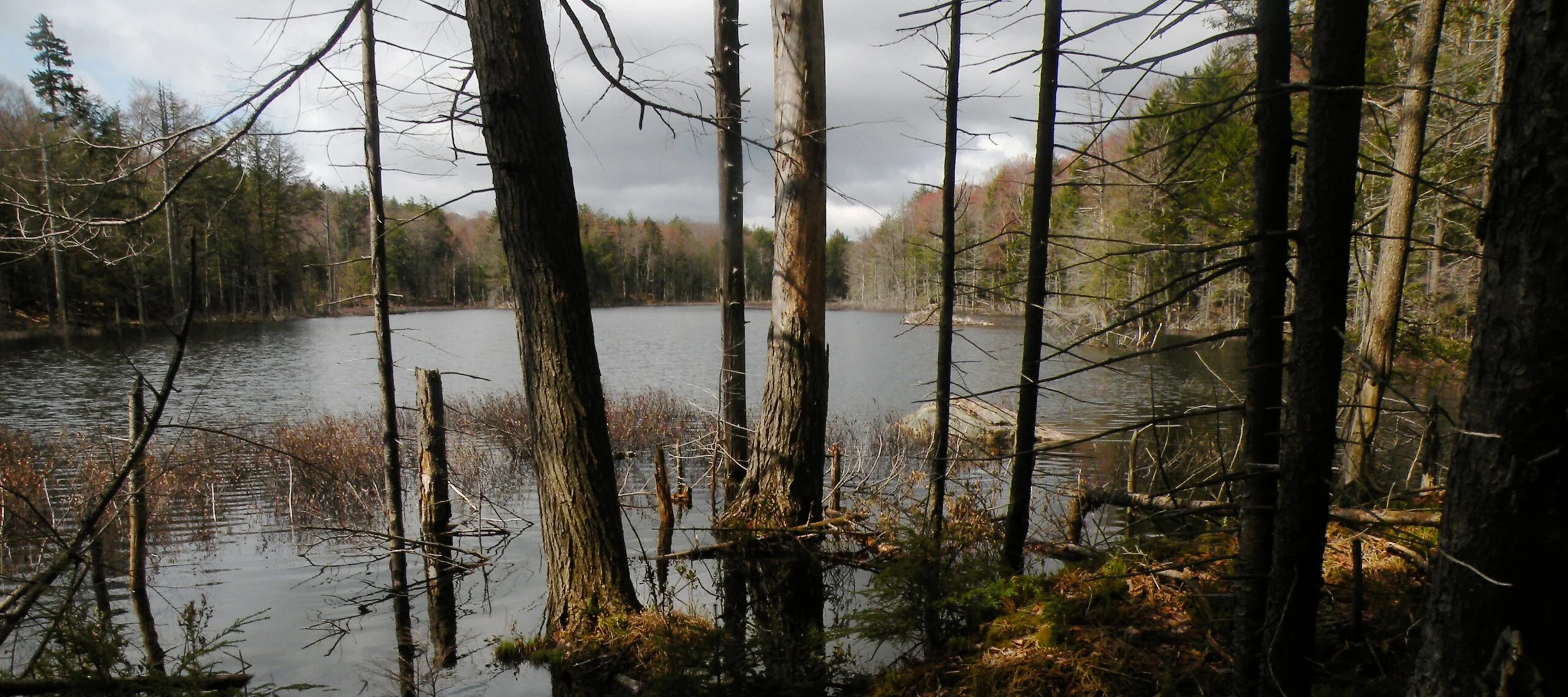
Seeing a potential wilderness designation in an area otherwise classified as wild forest often requires an active imagination and abundant optimism. However, neither trait is needed for one section of the Black River Wild Forest: the under-appreciated “Cotton Lake Wilderness.”
This term refers to a mostly undeveloped section of forest between the Black River and the main branch of Little Black Creek, which I first proposed for a wilderness reclassification in 2006.

The Company I Keep
…The animal seemed in no hurry to flee. I was the only human present on this entire wilderness lake, and he had nothing to worry about from me. So, realizing I might be here a while in observation, I grabbed a can of maple-flavored mead from my stash behind the tent and made this my Main Event. This was something to celebrate!…

Remembering Paul Schaefer: Camp Life at the Cataract Club
Paul Schaefer was perhaps the most famous Adirondack conservation “hero” of the twentieth century, the citizen-advocate who took on Albany on a number of Forest Preserve issues – and won. He hiked, he owned property, and he wrote. He is credited with the first known winter ascent of Crane Mountain in Warren County, and he tirelessly traveled the state to present the top issues concerning the Adirondack Park to civics-minded groups everywhere…
Ecosystems, Diversity, and the Wilderness Experience
If we have any hope of protecting our park and our planet, we need to involve everyone, and we desperately need perspectives that have been historically excluded.

Wilderness in the Presence of History
I can think of no place where this paradox - human vs nature - is more evident than at Sagamore Lake in Hamilton County, where legally-protected wilderness exists in the presence of history.
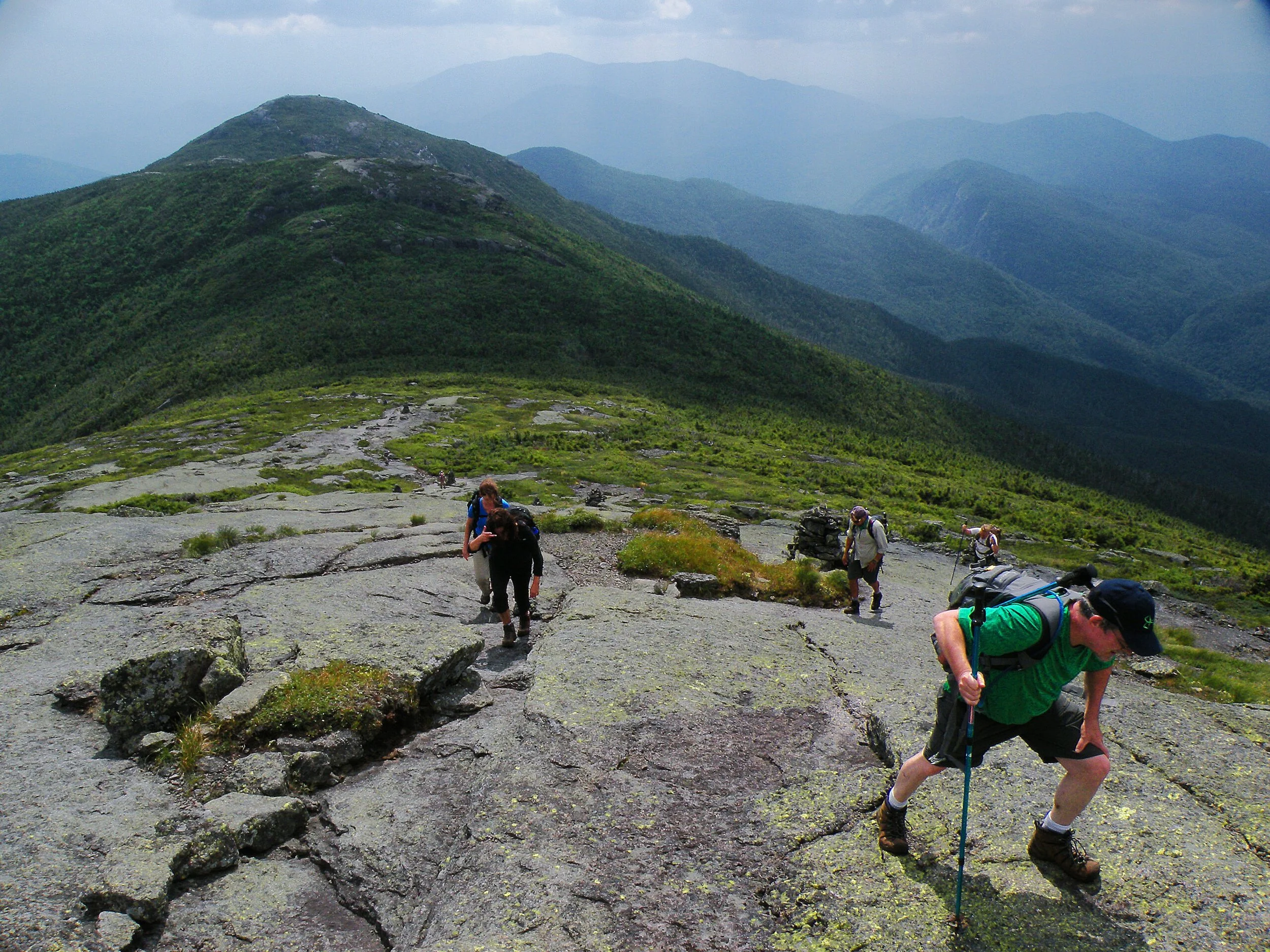
Public Invited to Join AWA for High Peaks Webinar
In the inaugural Wilderness Webinar, AWA Board member and High Peaks Advisory Group (HPAG) member Pete Nelson will talk about the recently released HPAG Final Report.

AWA Co-organizing an Alpine Summit Adaptive Management Pilot
This project, The Alpine Summit Adaptive Management Pilot, will build off the work of the current Summit Stewardship Program in the Adirondack High Peaks.

AWA Selects New Leader
The directors voted unanimously to elect Kayla White to fill the leadership position. White has been active in AWA since its founding in 2016 and a member of the board since 2018.